
The BVLOS Aviation Rulemaking Committee (ARC) submitted its final report on 10 March 2022. The FAA is not currently drafting the NPRM; the Part 108 NPRM was officially published on 7 August 2025 (90 FR 38212, Docket FAA-2025-1908), and the draft Final Rule moved to OIRA review on 10 July 2026. An ARC recommendation is not an NPRM, and an NPRM is not a final regulation.
The Brief
The BVLOS Aviation Rulemaking Committee (ARC) delivered its comprehensive recommendations to the FAA on 10 March 2022, proposing a risk-based approach to beyond-visual-line-of-sight drone operations. That advisory report served as the conceptual groundwork for the formal Part 108 Notice of Proposed Rulemaking, which the FAA published in the Federal Register on 7 August 2025 (90 FR 38212, Docket FAA-2025-1908).
Working operators must maintain a clear distinction along the rulemaking continuum: ARC recommendation ≠ NPRM ≠ final regulation. ARC proposals do not carry legal authority, and even the subsequent NPRM proposals remain non-binding until the final rule completes OIRA executive review, publishes in the Federal Register, and takes statutory effect.
Flight-Ready Breakdown
Rulemaking BaselineWhat Changed
The ARC process concluded on 10 March 2022. The FAA published the Part 108 NPRM on 7 August 2025, and submitted the draft final rule to OIRA on 10 July 2026 (RIN 2120-AL82).
Who is Affected
Commercial Part 107 pilots tracking federal policy shifts from exception waivers to standardized operational rules.
Why it Matters
Understanding the precise regulatory status prevents flight departments from misinterpreting advisory committee concepts as legally enforceable flight rights.
Before Next Mission
Plan all BVLOS operations through approved 14 CFR § 107.31 waivers or remain in visual line of sight. ARC proposals offer zero waiver-free operating relief today.
What Not to Assume
Do not assume the FAA is still drafting the Part 108 NPRM. Do not assume ARC recommendations were adopted verbatim in the proposed or draft final rule. Do not assume Part 108 is live.
Chronology of BVLOS Rulemaking
The development of normalized BVLOS flight follows a multi-year federal pipeline:
- 10 March 2022: BVLOS ARC delivers its Final Report and 87 consensus recommendations to the FAA Administrator.
- 7 August 2025: FAA publishes the Part 108 NPRM (90 FR 38212, Docket FAA-2025-1908) proposing airworthiness, operations, and licensing rules.
- 10 July 2026: FAA transmits the draft Part 108 Final Rule to OIRA under RIN 2120-AL82 for interagency review.
Until OIRA review concludes, the FAA Administrator signs the final rule, and the regulation takes effect, Part 107 remains the operative law of the land.
Bottom Line
The ARC report is historic advisory history, not current law. Fly strictly under Part 107.
Sources
- • Federal Aviation Administration: Beyond Visual Line of Sight Aviation Rulemaking Committee Final Report (10 March 2022) — https://www.faa.gov/regulations_policies/rulemaking/committees/documents/index.cfm/document/information/documentID/5407
- • Federal Register: Part 108 Notice of Proposed Rulemaking, 90 FR 38212 (7 August 2025, Docket FAA-2025-1908) — https://www.regulations.gov/docket/FAA-2025-1908
- • Office of Information and Regulatory Affairs (OIRA): RIN 2120-AL82 Review Record (Received 10 July 2026) — https://www.reginfo.gov/public/do/eoDetails?rrid=1457213
The Drone Pilot Brief does not accept payment for editorial coverage.

Related Briefs

The Digital Tollbooth: Inside Proposed Part 146 and the Corporate Battle to Control Low-Altitude Airspace
While the drone industry watches Part 108, the real business model is quietly unfolding in proposed Part 146. Here is how Automated Data Service Providers will gate, monitor, and monetize low-altitude commercial flight....

California’s 400-Foot Stadium Drone Bill Reaches the Governor: What It Means for Event Airspace
California lawmakers passed AB 2113, establishing a $500 fine for flying within 400 feet of outdoor concerts and sporting events. With Governor Newsom facing a September 30 deadline, the bill reignites the legal battle over federal airspace preemption....
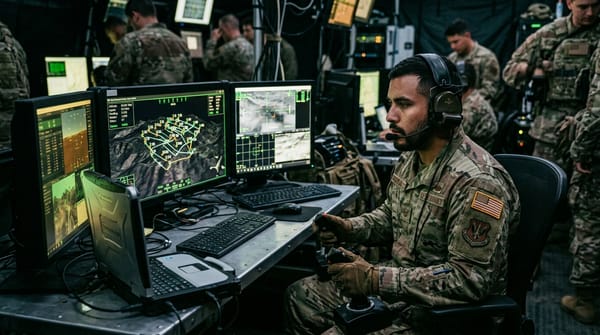
Gravity for U.S. Military Drone Operator Assessment
USNDA and OUSW(R&E) establish National Drone Wars as the central venue for evaluating U.S. military drone operator proficiency, signaling a major shift in UAS modernization, procurement, and doctrine....
Get The Preflight
The weekly operational-intelligence briefing for drone pilots. Filtered down to what actually matters before your next mission.